Skip to content
Licensed rebuilding · San Jose & the Bay Area
Water Damage Reconstruction in San Jose & the Bay Area
Dry is only halfway done. The water is gone, but the ceiling is still open. The floors need to go back in. You want your home back-not another contractor search.
FloodDry Water Damage Restoration now brings demolition, structural drying, and licensed reconstruction together. We rebuild damaged spaces in San Jose and the Bay Area, with the option to restore what was there or make approved improvements.
From the first tear-out to the final walkthrough.
What we can put back together
One contractor. From tear-out to touch-ups.
Water damage mitigation deals with the water and wet materials. Reconstruction rebuilds what had to come out. FloodDry can coordinate both, so the repair plan starts with an understanding of the damage behind the finishes.
Selective Demolition & Drying
Remove affected materials where needed, create drying access, and track moisture conditions. If your property is still wet, that work comes before new walls, flooring, or finishes.
Framing, Subfloors & Insulation
Repair damaged sections included in the reconstruction scope and replace removed insulation. Structural changes are reviewed for engineering and permit needs before that work begins.
Drywall & Ceiling Repair
Replace missing drywall, finish the seams, and restore texture and paint. We discuss how closely new work can match existing surfaces before the finishing work starts.
Flooring, Doors & Trim
Rebuild affected flooring and finish the details around it: baseboards, door trim, transitions, and other carpentry in the agreed scope. The goal is a finished room, not just a covered opening.
Kitchen & Bathroom Reconstruction
Put damaged kitchens and bathrooms back together with the approved cabinets, tile, surfaces, and finishes. Plumbing and electrical work are coordinated within the project's licensed scope.
Rebuilding with Improvements
Use the rebuilding stage to discuss different flooring, updated cabinets, or a better use of the space. Optional improvements are scoped separately from damage-related repairs, so you can decide what is worth adding.
These services are planned as part of an appropriate construction or reconstruction scope. Specialty work is performed or coordinated in accordance with licensing requirements, including appropriately licensed specialty contractors when needed. Read CSLB's Class B scope (opens in a new tab).
The license behind the rebuild
California-licensed for general building work.
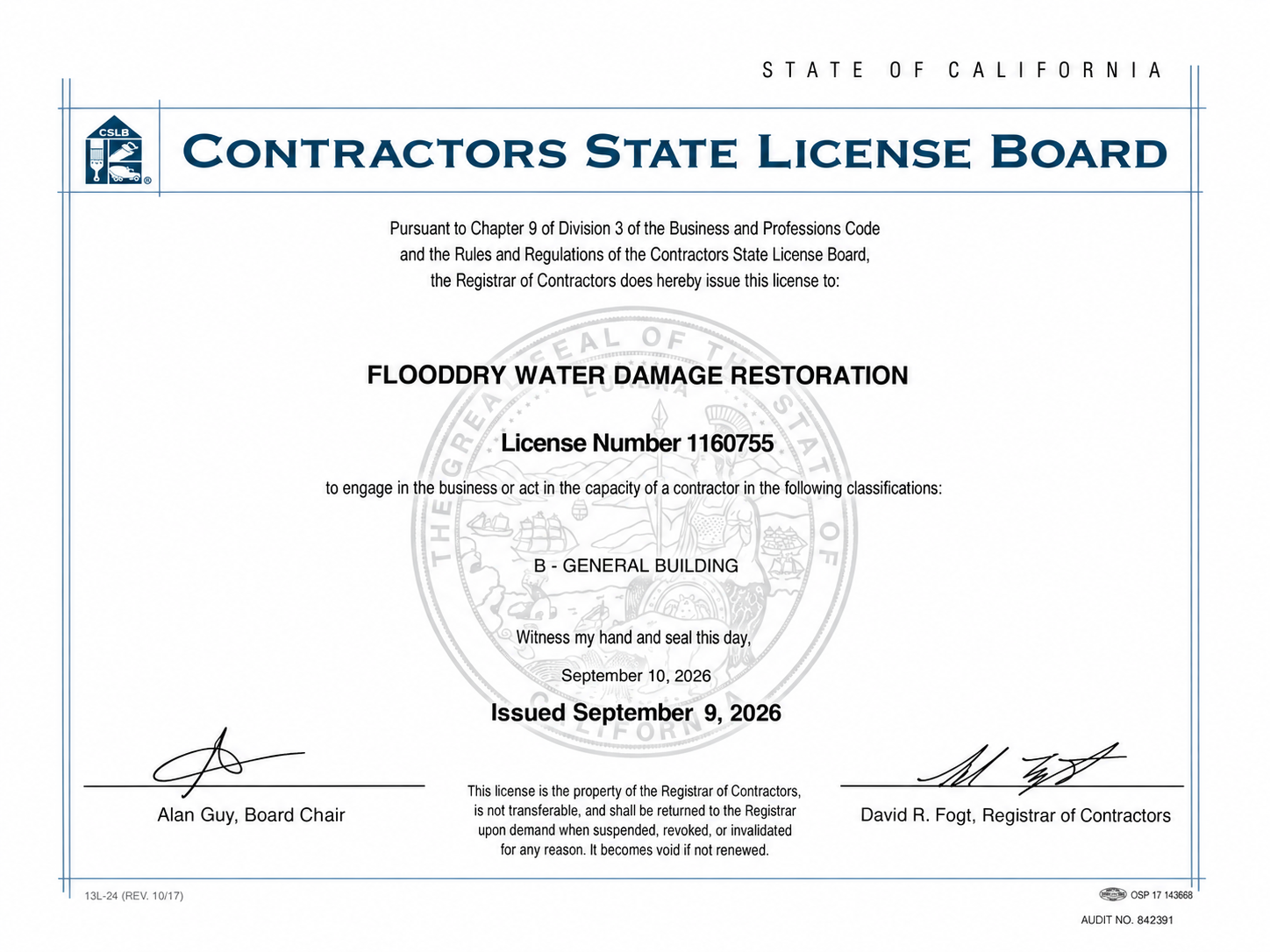
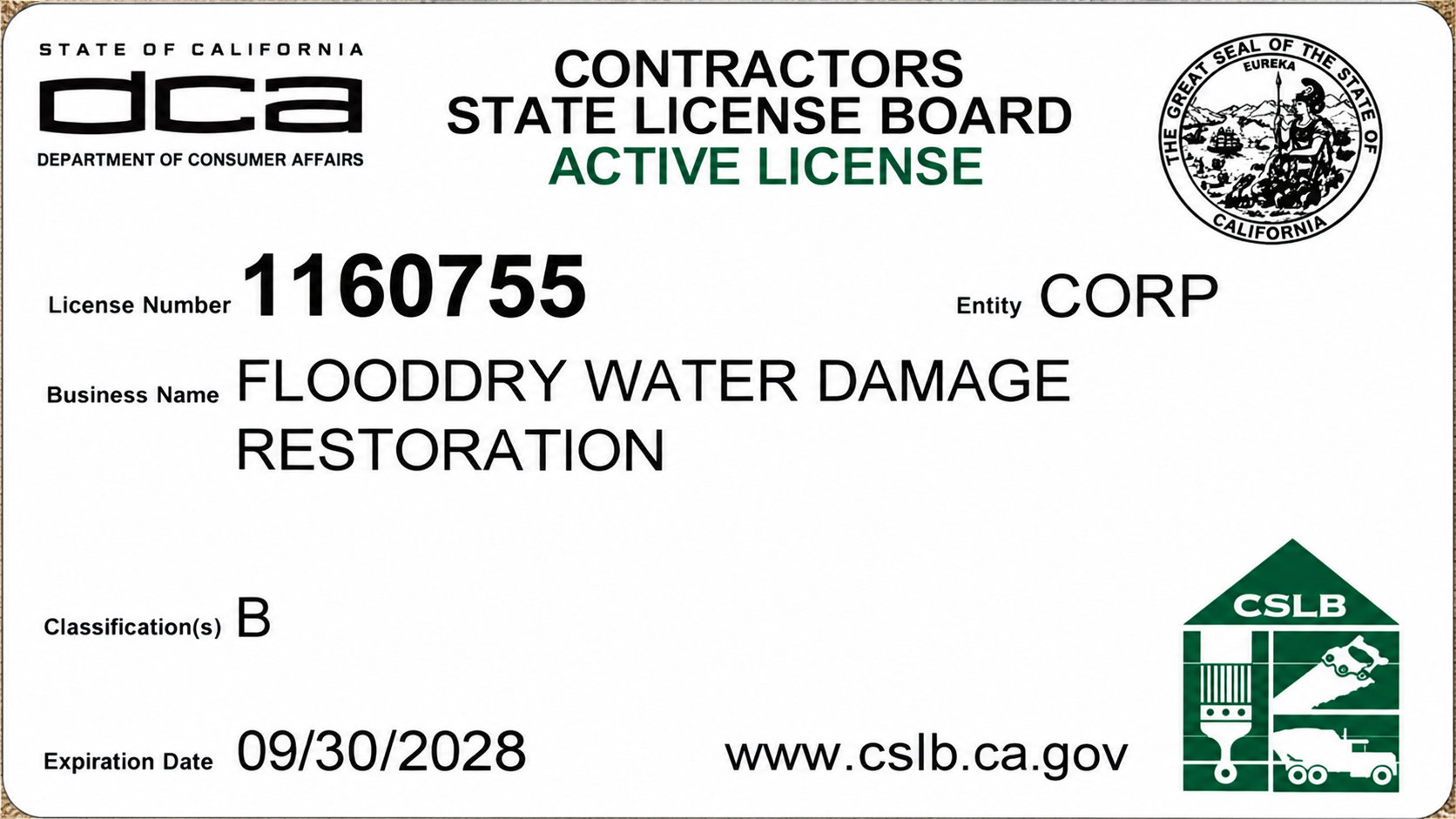
FloodDry Water Damage Restoration holds California contractor license #1160755, classification B - General Building.
The wall certificate and pocket license card are shown below. For current license status and record details, check directly with the California Contractors State License Board.
- Licensed business
- FLOODDRY WATER DAMAGE RESTORATION
- License number
- 1160755
- Classification
- B - General Building
- Entity shown on card
- Corporation (CORP)
- Expiration shown on card
Your home. Your call.
Bring it back. Or make it work better.
You don't have to turn a repair into a remodel. But if there's something you've wanted to change, the planning stage is the time to bring it up.
“I just want my home back.”
We build the scope around restoring the damaged areas to their pre-loss condition, with attention to the materials, layout, and finishes you already liked.
- Replace what was damaged or removed.
- Discuss practical matches for existing finishes.
- Account for applicable code requirements.
“While it's open, let's rethink it.”
A different floor, more useful storage, or updated kitchen finishes may make sense. We review the options, added work, and budget before they become part of the project.
- Separate repairs from optional upgrades.
- Review layout changes for feasibility and permits.
- Approve the added scope before work begins.
How the work moves forward
From damaged space to finished room.
We can plan the rebuild while mitigation is underway. Closing up the structure comes later-after the conditions and required steps are addressed.
Review the Damage
Inspect the affected areas, discuss the water source, and find out what you want restored or changed.
Remove & Dry
After the source is addressed, remove materials as needed and monitor drying with moisture readings.
Define the Rebuild
Review the written scope, materials, budget, and any permit or specialty-trade requirements.
Rebuild & Finish
Coordinate the agreed repairs, trade work, and required inspections, then complete the finishes.
Walk Through Together
Review the completed scope, identify any remaining details, and go over the project closeout.
Moisture conditions, necessary repairs, and any required inspections need to be addressed before new materials conceal the work. A surface that looks dry is not the whole picture.
From our Sunnyvale project notes
An opened kitchen ceiling. A finished repair.
A wet spot on the kitchen ceiling led to a leak beneath an upstairs toilet. A licensed plumber identified a failed wax ring and replaced it before mitigation began.
FloodDry inspected the affected area, set up containment, removed the affected ceiling drywall, cleaned and treated exposed materials, and monitored structural drying.
The drying equipment ran for five days. Once moisture readings confirmed the drying goal, the removed ceiling section was repaired and finished.
Read the full Sunnyvale project →- Source
- Failed upstairs toilet wax ring
- Drying phase
- Five monitored days
- Result
- Drying verified. Ceiling repaired and finished.
Five days refers to the drying phase of this specific project, not the total reconstruction schedule. Scope and timing vary by property.
The questions behind every rebuild
What will it cost-and how long will it take?
A ceiling repair and a kitchen rebuild are very different jobs. A useful estimate starts with the actual damage, the materials you choose, and the work needed to put the space back together.
- What is behind the finishesThe affected area, concealed damage, and condition of framing or subfloors shape the repair scope.
- What is going back inMaterial selections, availability, finish matching, and approved upgrades affect both budget and scheduling.
- What has to happen firstDrying verification, permits, inspections, and trade coordination can determine when each stage starts.
Ask us to review the repair scope and optional improvements separately. That makes it easier to see what you are approving.
Local to the Bay Area
Based in San Jose. Ready to discuss your rebuild.
FloodDry serves San Jose and the surrounding Bay Area. Contact us with the property address, the extent of the damage, and the work you have in mind.
Our restoration service area includes Sunnyvale, Santa Clara, Cupertino, Campbell, Los Gatos, Mountain View, Los Altos, Palo Alto, Redwood City, San Mateo, and Fremont.
Reconstruction availability and scheduling are confirmed for your address and project scope. Call to discuss current scheduling options.
View FloodDry's service areas →Questions homeowners ask
Reconstruction questions, answered.
Can FloodDry handle both water damage cleanup and reconstruction?
Yes. FloodDry combines water damage mitigation with licensed reconstruction. The project can move from selective demolition and structural drying to the agreed repairs, finishes, and final walkthrough. The exact scope depends on the damage and what you want restored.
Is FloodDry a licensed general building contractor?
FloodDry Water Damage Restoration holds California CSLB license #1160755, classification B - General Building. The license documents are displayed on this page. Check the current record through CSLB's official license lookup (opens in a new tab) before hiring.
What is the difference between mitigation and reconstruction?
Mitigation addresses the water and affected materials through removal, cleaning, and drying as needed. Reconstruction puts the damaged space back together, including the approved walls, ceilings, floors, cabinetry, and finishes. Drying a room does not replace the materials removed from it.
Can you review a rebuild after another company handled the drying?
Yes. Contact us with the address, photos, and any drying reports or repair estimates you have. We will review the existing conditions and proposed work before agreeing to a reconstruction scope. Previous dry-out work does not automatically mean the structure is ready to close.
Can I change the flooring, cabinets, or layout instead of putting everything back the same way?
Yes, you can ask for improvements as part of the reconstruction plan. Finish changes and layout changes can involve different costs, trades, and permit requirements. We review feasibility and keep owner-selected upgrades separate from damage-related repairs before you approve the work.
What about permits, plumbing, and electrical work?
Permit requirements depend on the work and the local building department. The reconstruction scope should identify who is responsible for permits, required inspections, and specialty-trade work. FloodDry coordinates the agreed project within its licensed scope, with appropriately licensed specialty contractors when needed.
How long does reconstruction after water damage take?
There is no single timeline for every property. The size of the repair, concealed damage, material availability, permits, inspections, and approved changes all matter. Drying and reconstruction are separate phases; a five-day dry-out does not mean the whole rebuild will be finished in five days.
Will my insurance pay for reconstruction or upgrades?
Your insurer determines coverage under your policy. FloodDry can provide damage documentation and scope information, but cannot guarantee payment. Do not assume new finishes, layout changes, or other optional upgrades will be covered; ask your adjuster and review those costs separately.
Can I stay in my home while the work is underway?
That depends on the work areas, access, utilities, and whether essential rooms can remain safely usable. A contained repair may have a different impact than a kitchen or bathroom rebuild. Discuss access restrictions and any temporary relocation needs during project planning, before work starts.